Ocean Waves on a Pebble Beach — 10 Hours for Sleep
The distinguishing feature is the substrate. Waves on sand give you a soft broadband wash; waves on shingle add the clatter of stones dragging back down the slope, which fills in the mid and upper range and gives each wave a defined end. The result is busier than a sand recording and, for a lot of people, easier to sleep through — there is more texture for the ear to settle into rather than a flat hiss.
This is a field recording rather than a loop, so the interval between sets wanders the way real water does. That irregularity is doing useful work: a perfectly cyclic loop starts to announce itself after twenty minutes, and once you hear the seam you cannot unhear it. Ten hours, no music, no narration.
More Nature & Ambient
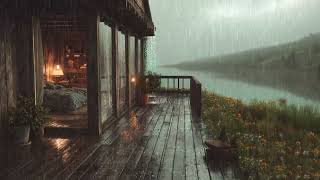 Rainy Night at the Lakeside Cabin | Soothing Rain Sounds for Sleep
 Snowstorm Cabin — Fireplace & Heavy Snow for Sleep
 Thunderstorm on an Old House — Heavy Rain & Thunder
 Tranquility - Deep Healing Relaxing Music
 Winter Ambient Study Music To Concentrate
 Brown Noise & Campfire — Deep Sleep and Focus